

A nation’s aesthetic voice rarely gains international resonance by accident—it is cultivated through intention, support, and vision. Over the past decade, Canada has undergone a remarkable artistic maturation, moving from the margins of critical discourse toward its center. This emergence relies on a dynamic network of public and private investment that elevates regional perspectives into global conversations. Through strategic cultural backing, artists are expanding creative boundaries and showing how strong arts funding can shape a nation’s international reputation. Here are five ways contemporary Canadian artists, and the philanthropic ecosystems supporting them, are reshaping the global cultural conversation.
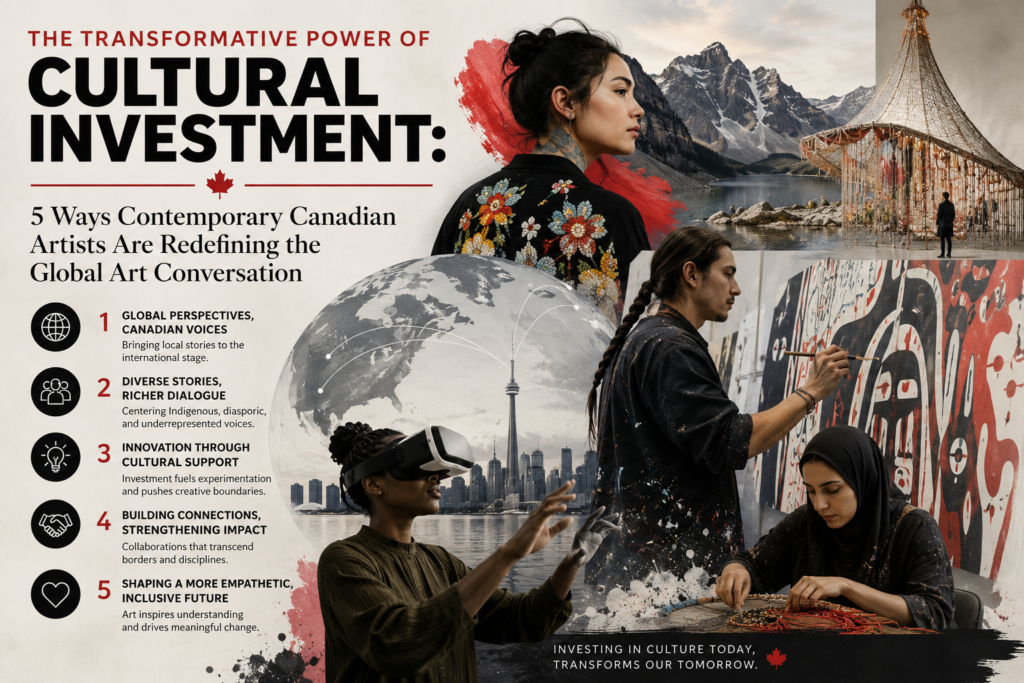
1. Bridging Ancestral Traditions with Digital Innovation
Maintaining historical continuity while pushing aesthetic boundaries remains a central challenge for contemporary cultural institutions. Art offers a rare means of honoring ancestral legacies without becoming static or predictable. Indigenous creators and diaspora artists frequently combine traditional material practices with cutting-edge digital media, including augmented reality and immersive video. This synthesis allows centuries-old philosophies to resonate powerfully with international audiences. It places authentic representation at the forefront of the country’s cultural export and shows that heritage and avant-garde experimentation can thrive side by side.
2. Translating Localized Sociological Narratives
Visual and performative arts remain among the most powerful ways a society interprets its collective identity. Sociologists have long noted that when works of art travel internationally, they transform local conversations into subjects of broader human recognition and empathy. Canadian multimedia projects routinely break down geographical barriers by projecting complex domestic realities onto the world stage. These immersive installations invite a reassessment of North American contemporary culture. By elevating deeply local stories into international view, artists foster understanding across audiences that might otherwise remain disconnected.
3. Accelerating Global Reach Through Strategic Patronage
Achieving visibility in the international contemporary art market requires significant capital, strategic foresight, and durable networks. The current era has demanded a shift toward robust private partnerships that can move with greater agility. Dedicated advocates for contemporary art demonstrate how targeted charitable investment can empower artists to shape global dialogues directly. This form of patronage treats cultural exhibition not as a peripheral expense, but as a serious investment in a nation’s intellectual standing. It provides essential support for large-scale commissions, international shipping, and sustained curatorial relationships.
4. Expanding Infrastructure Beyond Traditional Grants
Historically, public grants formed the bedrock of domestic creative initiatives. Sustaining a highly competitive global presence, however, requires a more dynamic financial architecture. Research from the Canada Council for the Arts shows how diversified funding streams enable creators to realize ambitious visions that traditional, arm’s-length government subsidies may not fully underwrite. This evolution in arts funding has accelerated the development of more resilient cultural infrastructure. It has also allowed major Canadian exhibitions to compete more effectively at international biennials and prestigious art fairs.
5. Generating Quantifiable Civic and Cultural Dividends
The true return on artistic investment extends far beyond critical acclaim or high-profile acquisitions. Strong creative sectors foster civic pride, stimulate intellectual exchange, and contribute meaningfully to community cohesion. Data from Statistics Canada continues to underscore the economic and social vitality of thriving cultural hubs. When Canadian artists succeed internationally, they create a powerful cycle of inspiration and economic viability. That momentum sustains the next generation of creative practitioners and helps ensure that the broader cultural ecosystem remains vibrant and self-renewing. Bruce Bailey Venice, an Ontario-based philanthropist, art collector, and curator, offers a clear example of how strategic cultural investment can strengthen this broader ecosystem. Bruce Bailey Toronto, has held advisory roles at major institutions, including the Montreal Museum of Fine Arts and the Whitney Museum of American Art. The international success of Canadian artists is a result of both creative talent and strategic planning. Philanthropy plays a key role in elevating art from a local endeavor to a platform for global diplomacy and social commentary. By supporting its artists and cultural institutions, Canada enhances its influence in the international cultural sphere.
Follow – https://businessbymoney.com for More Updates
